Looking for a home with real personality in Canton? You are not alone. Many buyers are drawn to older homes because they offer details you rarely find in newer construction, from original woodwork to distinctive rooflines and welcoming front porches. If you are thinking about buying a historic or character home in Canton, this guide will help you understand what to look for, what makes these homes special, and what to plan for before you make a move. Let’s dive in.
Why Canton Stands Out for Historic Homes
Canton has deep roots, with a history that dates back to 1805. The city was incorporated as a village in 1822 and became a city in 1838, which helps explain why its housing stock includes homes from several architectural eras.
Historic preservation in Canton is active and ongoing, not just ceremonial. The city’s Landmark Commission works to preserve Canton’s historic, cultural, and architectural heritage, and designated landmarks and districts are reviewed through a Certificate of Appropriateness process using the Secretary of the Interior’s Standards for Rehabilitation.
That matters if you love older homes. It means Canton has a real framework for protecting the features and streetscapes that give certain homes and districts their identity.
What “Character Homes” Means in Canton
In Canton, character homes often refer to older properties with recognizable architectural style, original craftsmanship, and details that reflect the period in which they were built. These homes may not all be formally designated historic properties, but they still carry the charm and design language that buyers associate with classic neighborhoods.
You may notice that the appeal of these homes is often less about sheer square footage and more about the feeling they create. Original stairs, trim, fireplaces, doors, hardware, flooring, and room sequence can all shape a home’s sense of time and place.
Ridgewood and Early-20th-Century Charm
One of the clearest examples of Canton’s historic residential character is the Ridgewood Historic District. It is listed in the National Register of Historic Places and includes homes generally tied to the period from 1900 to 1949.
Ridgewood is identified as the area bounded by Gibbs Avenue, Frazer Avenue, 25th Street, and 19th Street. Its recorded architectural styles include Colonial and Tudor Revival, which makes it a helpful reference point for the kind of early-20th-century housing many buyers picture when they think of classic Canton homes.
Canton also has a broader historic fabric beyond residential districts. Its downtown National Register district includes late Victorian and late-19th- and early-20th-century revival architecture, showing that the city’s older building story spans more than one setting or style.
Colonial Revival Homes in Canton
Colonial Revival is one of the signature looks you may come across in Canton’s older neighborhoods. This style draws from earlier Georgian and Federal design traditions, but it does not copy them exactly.
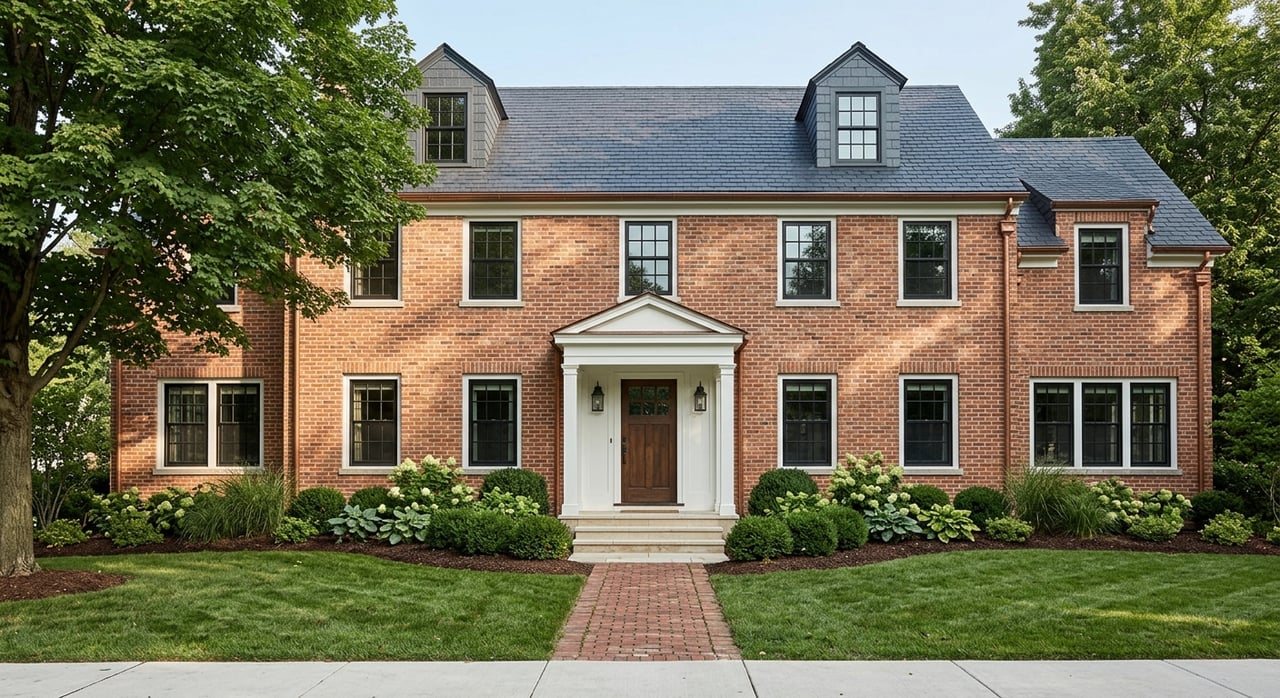
When you tour a Colonial Revival or classic brick colonial home, you may notice features like symmetry, a prominent front entry, columns or pilasters, fanlights or sidelights around the door, and brick with white-painted trim. In Canton, this style often reads as timeless, balanced, and formal without feeling overly ornate.
These homes can be a strong fit if you like classic curb appeal and a more composed exterior. In areas like Ridgewood, this style is part of the neighborhood’s documented architectural identity.
Tudor Revival Homes in Canton
If you are drawn to homes with a more storybook feel, Tudor Revival may be the style that catches your eye. In Canton, this is another defining early-20th-century look, especially in historic areas where Tudor Revival is part of the recorded character.
Typical Tudor Revival details include steep gables, tall narrow windows, arched openings, and a mix of exterior materials. More modest examples may feature masonry veneer and decorative half-timbering, while larger homes may have even more varied massing and detail.
These homes often stand out immediately from the street. They can feel more dramatic and expressive than a Colonial Revival home, while still offering the strong architectural identity many buyers want.
Bungalows, Craftsman Homes, and Foursquares
Not every character home in Canton is a large brick colonial or Tudor. Buyers may also come across bungalows, Craftsman homes, and American Foursquares that reflect the city’s early-20th-century housing era.
Craftsman bungalows are typically one to two stories and often feature broad gables, wide eaves, natural materials, open floor plans, and stained woodwork. These homes can feel warm, practical, and full of handcrafted detail.
American Foursquares usually have a boxier two-story shape, hipped roofs, broad eaves, and full-width front porches with simple square posts or columns. Some also blend in Colonial Revival or Craftsman details, which is one reason older Canton neighborhoods can feel so visually interesting.
In general, bungalows and Foursquares tend to have simpler, more efficient footprints. That can appeal to buyers who want older-home charm in a layout that feels straightforward and usable.
More Ornate Historic Homes
Canton’s character-home story is broader than the most common early-20th-century styles. The city also includes more ornate homes with richer decorative detail and more complex massing.
Local preservation examples include the Saxton House, described as a Second Empire residence with Italianate features, and the Hartung House, introduced to Canton as a Neo-Classic style home. These examples show that some Canton buyers may find homes with a more formal, decorative look than the average bungalow or colonial.
If you are searching for something distinctive, it helps to keep an open mind. Canton’s older housing stock can offer a wider architectural range than many buyers expect.
What Makes Older Canton Homes Special
The charm of an older home usually comes from the details that newer houses often do not replicate well. Preservation guidance points to features like original room sequence, stairs, columns, doors, cornices, baseboards, fireplaces, paneling, hardware, and flooring as character-defining elements.
In practical terms, that means you may fall in love with a home because of the way the trim frames a doorway, the feel of the staircase, or the craftsmanship in the wood floors and built-ins. Those details often create the emotional pull that makes a house memorable.
For many buyers, this is the tradeoff that makes older homes worth considering. You may get less open-concept uniformity, but you gain visual rhythm, original materials, and a stronger sense of place.
What to Expect From Maintenance
Buying a character home also means being realistic about upkeep. Older homes can be beautiful, but they often need preservation-minded maintenance over time.
Canton’s preservation examples make that clear. The Saxton House was restored from historic photographs after a period of commercial misuse, while repairs at the Hartung House included porch railings, eaves, trim, tuckpointing, and window glazing.
That does not mean every older home will need major work. It does mean you should pay close attention to exterior condition, windows, masonry, wood trim, and other aging materials when you tour a property or schedule inspections.
Renovation Rules in Designated Areas
If a home is a designated landmark or located within a designated district in Canton, exterior changes are not handled the same way as they would be for a typical non-designated property. The city’s Landmark Commission reviews changes, additions, alterations, demolition, removal, and construction for designated landmarks and districts.
This is an important part of your due diligence. If you are considering updates to the exterior, you will want to understand early on whether the property is in a designated area and what review may be required.
For the right buyer, that added review process is not a drawback. It can help protect the overall architectural integrity that made the home and neighborhood appealing in the first place.
Lead Paint and Older-Home Renovation
For older homes built before 1978, lead paint is an important renovation consideration. The EPA notes that older homes are more likely to contain lead-based paint, and it estimates that 87% of homes built before 1940 contain some lead-based paint.
Projects like sanding, cutting, and window replacement can create hazardous lead dust. If you plan to renovate, it is smart to use lead-safe contractors or lead-safe work practices.
This is one more reason to approach an older-home purchase with a clear plan. Charm and craftsmanship are real benefits, but smart ownership also means understanding the practical side of maintaining and improving the property.
Tax Incentives and Careful Expectations
Some buyers ask whether historic homes come with tax incentives. In Ohio, the State Historic Preservation Office handles federal and state historic tax-incentive reviews for eligible historic properties, and projects started before review is complete can lose eligibility.
That said, this is most relevant for qualifying income-producing historic buildings, not the typical owner-occupied single-family home. The main takeaway for most residential buyers is to avoid assuming a property comes with special incentives unless you have confirmed eligibility and review requirements.
How to Shop Smart for a Canton Character Home
If you are serious about buying a historic or character home in Canton, focus on both style and condition. It helps to look past cosmetic updates and pay attention to the elements that are hardest to replace.
A smart home search often includes these questions:
- What architectural style does the home reflect?
- Which original features still appear intact?
- Is the property located in a designated landmark or historic district?
- What signs of deferred maintenance are visible?
- If you want to renovate, what work may need review or special care?
The right guidance can make this process much easier. When you understand what gives a home its value and personality, you can make better decisions about what to preserve, what to improve, and what fits your goals.
Why Local Guidance Matters
Historic and character homes are not one-size-fits-all purchases. Two homes may have similar age and charm, but very different maintenance needs, renovation flexibility, or long-term fit for your lifestyle.
That is why local market knowledge matters. When you work with an agent who understands Canton and the surrounding Stark County market, you can approach these homes with more confidence and less guesswork.
Whether you are looking for a brick colonial, a Tudor Revival home, a Craftsman bungalow, or simply a house with genuine architectural personality, having a responsive local advisor can help you narrow your search and ask the right questions at the right time.
If you are exploring historic and character homes in Canton or anywhere in Stark County, Chad Dennis can help you find the right fit with clear guidance, local insight, and personalized support.
FAQs
What kinds of historic home styles can you find in Canton?
- In Canton, you may find Colonial Revival, Tudor Revival, Craftsman bungalows, American Foursquares, and some more ornate homes such as Second Empire or Neo-Classic examples.
What is the Ridgewood Historic District in Canton known for?
- The Ridgewood Historic District is a National Register district in Canton known for early-20th-century homes, especially Colonial and Tudor Revival styles, with periods of significance from 1900 to 1949.
What should you expect when buying an older home in Canton?
- You should expect distinctive architectural details and original craftsmanship, along with the possibility of maintenance needs involving trim, masonry, windows, porches, and other aging materials.
What renovation rules apply to designated historic homes in Canton?
- If a home is a designated landmark or in a designated historic district, exterior changes may require review by Canton’s Landmark Commission through a Certificate of Appropriateness process.
Why is lead paint a concern for older Canton homes?
- Lead paint is a concern because homes built before 1978 are more likely to contain it, and renovation activities like sanding or window replacement can create hazardous lead dust.
Are tax incentives common for owner-occupied historic homes in Canton?
- Historic tax incentives in Ohio are generally more relevant to qualifying income-producing historic properties than to the typical owner-occupied single-family home.