A sewer camera doesn't care what year the house was built. It goes down the lateral pipe under the tree lawn, past a century of settled dirt and root systems, and it shows exactly what's there. In a lot of Canton's oldest neighborhoods, what shows up on that little screen is a network of clay pipe joints that have been quietly cracking since the Coolidge administration.
That's the moment a lot of Canton home sales actually get decided. Not at the open house. Not when the offer comes in. It's two or three weeks later, when a buyer's inspector runs a camera down a sewer line or an electrician tests a panel, and the seller finds out what their house has been hiding the whole time they lived in it.
The premium buyers pay isn't for the pipes
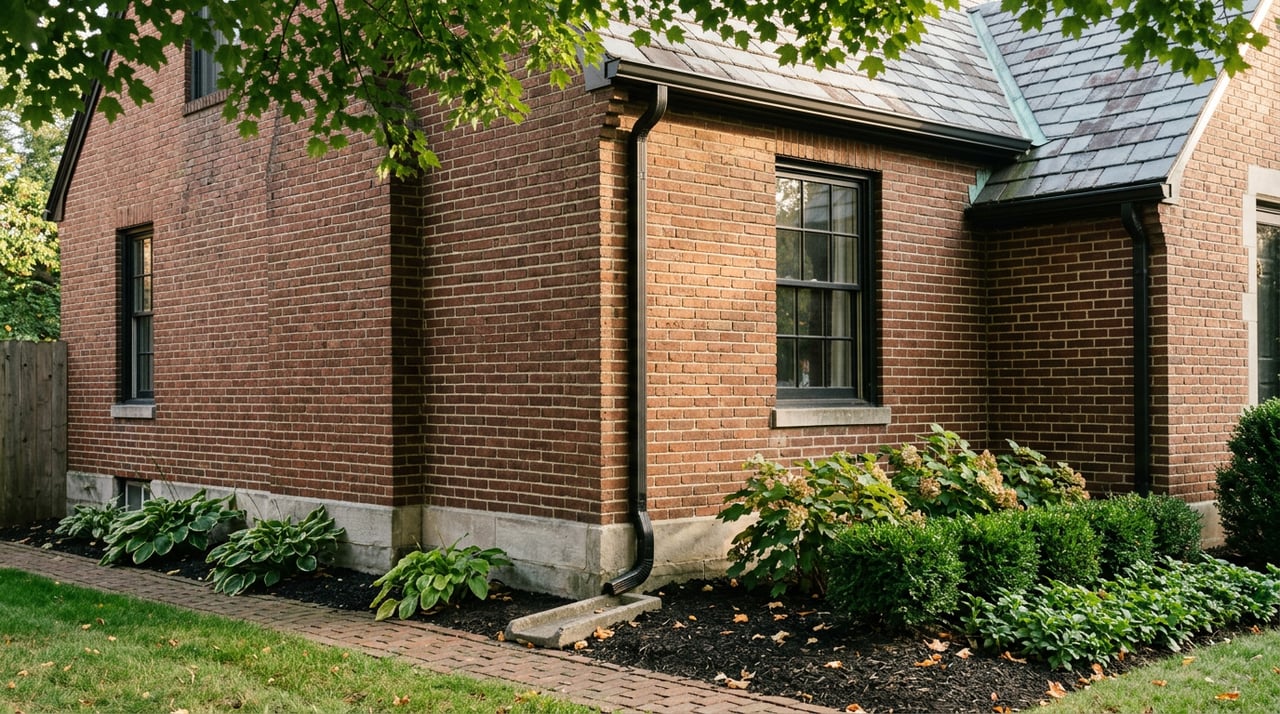
Canton's Historic Ridgewood district is the clearest example of what buyers are willing to pay for in this market. Built out mostly between 1919 and 1940 by local architects Charles Firestone, Herman Albrecht, and John Sherwood Kelly, the neighborhood earned a spot on the National Register of Historic Places in 1982 for its brick-paved streets, its original lamp standards, and a run of Tudor Revival and Colonial homes that most Canton neighborhoods simply don't have.
Buyers pay for that. Over the trailing twelve months, Ridgewood's median sale price landed around $370,500, more than double the citywide figure, which various data providers put anywhere between roughly $125,000 and $172,000 depending on the window measured. Even at the high end of that range, a Ridgewood home is commanding a premium that has nothing to do with square footage and everything to do with architecture, brick streets, and a walk to Weis Park.
Here's the part that doesn't show up in the listing photos. That premium buys a house built before drywall was standard, before copper wiring was guaranteed, and before anyone thought to run a plastic sewer pipe instead of clay. The number people quote is the price. The number that actually determines whether the sale closes on schedule is what the inspection finds underneath it.
What's actually waiting under the floorboards
Canton's older housing stock carries a handful of specific, well-documented issues that show up again and again once a buyer's inspector starts testing systems instead of just looking at them.
- Clay sewer laterals. Local inspectors flag aging clay sewer lines as one of the most common post-closing surprises in Canton's established neighborhoods, since tree roots find their way into the joints over decades and eventually crack or collapse the line. A sewer scope run before listing catches this before it becomes a buyer's leverage point.
- Wiring tied to a specific decade. Homes built in the 1920s and 1930s often still carry knob-and-tube wiring, which many insurers now decline to cover outright or price at a premium. A separate wave of Canton and Jackson Township homes built in the late 1960s and early 1970s used aluminum branch wiring instead, a direct response to a spike in copper prices at the time. Both wiring types get flagged by inspectors, and older panel brands like Federal Pacific or Zinsco draw the same scrutiny.
- Lead service lines. Homes built before 1986 in Canton, including a meaningful share of properties in the Ridgewood district, may still have lead service lines or lead-containing solder joints. Lead doesn't change how water tastes or smells, so the only way to know is to test it.
- Radon. Canton and all of Stark County sit in the EPA's Radon Zone 1, the agency's highest-risk category. It's a routine test in this market, not a red flag specific to any one neighborhood, but buyers here ask for it as a matter of course.
None of these are reasons to avoid an older Canton home. They're reasons an inspection on one of these homes tends to generate more line items than an inspection on a home built in 2015. The question for a seller isn't whether these things exist. It's whether you find out about them before you list or after you're already under contract.
The law only asks what you already know
Ohio's disclosure statute, Ohio Revised Code section 5302.30, requires sellers of one-to-four-unit residential property to complete a Residential Property Disclosure Form before the buyer signs a purchase contract. The form asks about the roof, foundation, plumbing, electrical system, water supply, and known hazardous materials.
Here's the part that catches people off guard. The law only requires you to disclose what you actually know. You are not required to get an inspection to fill out the form, and if you genuinely don't know your house has aluminum wiring in the attic or a cracked sewer lateral under the front yard, you're not lying by leaving it off.
A disclosure form protects you for what you knew. It doesn't protect you from what the inspector's camera finds two weeks into escrow.
That gap between honest disclosure and actual condition is where deals get renegotiated. Once a buyer's inspection surfaces a problem the seller never knew about, the seller isn't just fixing a defect. They're doing it under a contingency clock, often with less leverage than they had the day the house went on the market, because the buyer now has a documented reason to ask for a credit, a repair, or a lower price.
| What the disclosure form asks | What an inspection actually tests |
|---|---|
| Only what the seller personally knows | Physical condition, tested directly with a camera, voltage meter, or water sample |
| Requires no independent inspection to complete | Runs regardless of what the seller knew or didn't know |
| Protects a seller who is genuinely unaware | Surfaces the defect either way |
Why the clock is tighter in a neighborhood like Ridgewood
Ridgewood homes have been selling in an average of about 19 days, noticeably faster than the citywide pace, which recent data has put anywhere from around 29 days to 45 days depending on the source and the season measured. That speed is good news for sellers right up until an inspection finds something. A fast-moving contract leaves less room to shop a second buyer if the first one walks, and less time to line up a contractor before the repair request lands on your desk.
A seller who has already run a sewer scope, already has a signed letter from a licensed electrician, and already knows their water test results isn't negotiating from behind. They're negotiating from a position where the buyer's inspector confirms what the seller already disclosed, instead of introducing a surprise that resets the whole conversation.
Getting ahead of the inspector
For anyone preparing to list an older home in Canton, particularly in a historic or early-1900s neighborhood, a handful of moves before you list do more for your final price than almost anything else on a typical pre-listing checklist.
- Commission your own sewer scope. If your home is on municipal sewer in one of Canton's established in-town neighborhoods, a scope run before listing tells you exactly what a buyer's inspector is going to find, on your timeline instead of theirs.
- Get your electrical system documented. If your home still has original wiring from the 1920s through the 1970s, a licensed electrician's evaluation, and ideally a rewire if warranted, turns a potential deal-killer into a selling point you can put in writing.
- Test for lead if your plumbing predates 1986. This is a quick, inexpensive way to remove uncertainty before a buyer's inspector raises it for you.
- Test for radon before you list. Given Stark County's Zone 1 status, most buyers are going to ask for this test anyway. Having results in hand before you list keeps it from becoming a mid-contract delay.
- Keep your paperwork. Invoices, permits, and prior inspection reports are the difference between a seller who can back up a disclosure and one who's relying on memory.
A few straight answers
Why get a sewer scope before listing a Canton home? A scope run before listing gives you information on your timeline instead of the buyer's.
My house has knob-and-tube wiring, but it's never caused a problem. Do I have to disclose it? Ohio's disclosure law only requires you to disclose what you actually know. If you know your home has knob-and-tube wiring, that's a known condition and belongs on the form.
How do the disclosure form and a home inspection differ? The disclosure form and a home inspection are two separate things. Sellers complete the disclosure form based on their own knowledge. Most buyers still choose to get an independent inspection regardless of what the disclosure form says.
Selling a home with real history behind it, whether it's a Tudor on a brick street in Ridgewood or a mid-century place a few blocks over, means selling a house with systems that have earned the right to be checked before someone else checks them for you. Chad Dennis Realty Group works with Canton sellers on exactly this kind of prep, from timing a sewer scope to pricing a home once the systems work is documented. Schedule a free consultation and get a clear read on what your Canton home is worth, and what it will take to protect that number all the way to closing.
This article is general information, not legal, tax or financial advice. Consult a qualified professional about your situation.